Reach the Right Customers at the Moment They’re Searching.
Your potential customers are already searching for products and services like yours. Search Engine Marketing helps your business appear in relevant search results through paid advertising, making it easier to connect with people who are actively looking for what you offer.
Be Visible When Your Audience Is Ready to Take Action.
Search Engine Marketing (SEM) uses paid advertising on search engines to help businesses reach people who are searching for specific products, services, or solutions. By placing relevant ads in search results, businesses can connect with potential customers based on what they are actively looking for.
Many businesses struggle to reach the right audience through organic visibility alone, especially when they are entering a competitive market or promoting a specific offer. Without proper targeting, advertising budgets can also be spent on irrelevant clicks that are unlikely to generate meaningful enquiries.
My approach focuses on understanding your business goals, researching relevant search terms, and developing campaigns around your audience’s intent. The aim is to make every campaign purposeful, with clear targeting, relevant messaging, and regular performance reviews.

From Search Intent to Campaign Performance
Keyword Research & Search Intent
I identify relevant search terms that potential customers use when looking for your products or services. This includes understanding the intent behind different searches and selecting keywords that align with your business objectives. The right keyword selection helps your ads reach people who are more likely to be interested in your offering.
Audience & Location Targeting
Reaching a large audience is not always the same as reaching the right audience. I use relevant targeting options, such as location, language, and other available campaign settings, to align your advertisements with your intended market. This helps reduce irrelevant traffic and keeps campaigns focused on potential customers.
Search Campaign Setup
A well-organised campaign makes it easier to manage advertising activities and understand performance. I structure campaigns around relevant products, services, and audience needs, with suitable ad groups and targeting settings. This creates a clear foundation for managing your campaigns and reviewing which areas are performing well.
Budget Management & Bid Optimisation
Advertising spend needs to be planned with your business objectives in mind. I focus on setting suitable budgets, reviewing bidding strategies, and monitoring how campaign costs relate to results. Regular checks help identify unnecessary spending and areas where adjustments may improve the use of your advertising budget.
Ad Copywriting & Creative Messaging
Your advertisement needs to communicate the right message within a limited space. I develop clear, relevant ad copy that highlights your offering, addresses customer needs, and encourages people to take the next step. Strong messaging helps your business stand out in search results and sets accurate expectations before visitors reach your website.
Campaign Monitoring & Performance Analysis
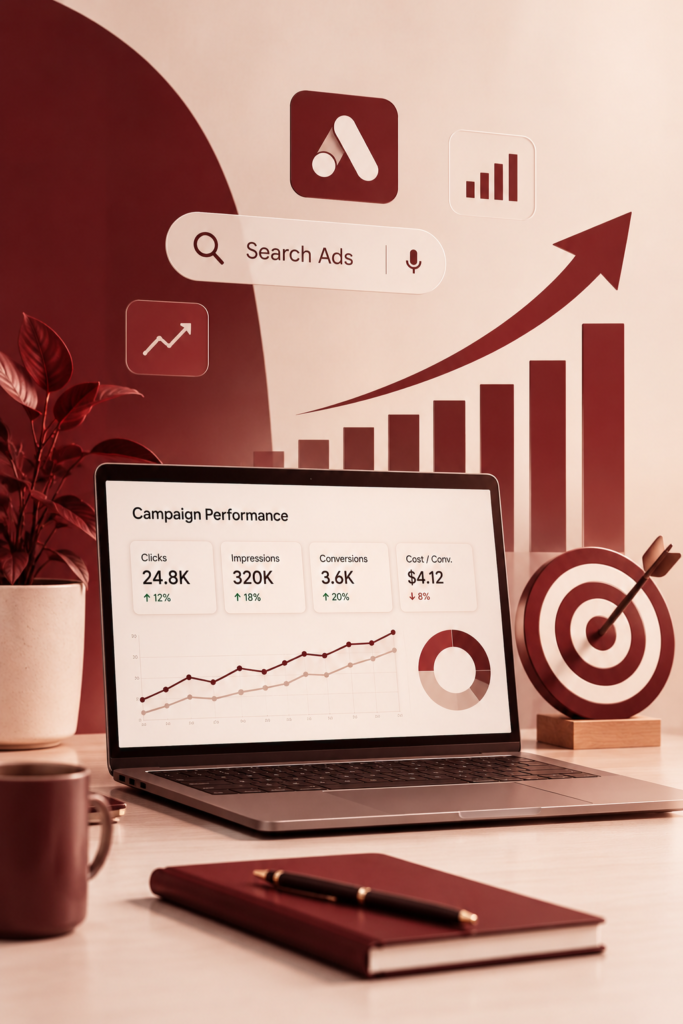
Launching an advertisement is only one part of the process. I review important campaign metrics such as clicks, impressions, click-through rate, conversions, and cost per conversion where tracking is available. These insights help identify what is working, what needs attention, and which changes should be considered next.
Paid Visibility Matters. Making Every Click Count Matters More.
Search Engine Marketing can put your business in front of people who are actively looking for relevant solutions. However, visibility alone does not make a campaign successful. The keywords, advertisements, targeting, budget, and landing page experience all need to work towards the same objective.
My approach brings these elements together with a clear understanding of your business and its audience. From selecting relevant search terms to writing useful ad messages and monitoring campaign activity, each step has a purpose. This makes it easier to understand how your advertising is performing and where improvements may be needed.
A strategically managed campaign looks beyond clicks and impressions. It considers the quality of website visits, customer enquiries, and actions that matter to your business. With clear objectives and regular performance reviews, SEM becomes a more informed way to build online visibility, attract potential customers, and support business growth.
A Little Clarity Before We Create.
1. What is Search Engine Marketing, and how can it benefit my business?
Search Engine Marketing is a form of digital advertising that helps businesses appear in paid search results. It can increase your visibility for relevant searches, bring targeted visitors to your website, and create opportunities to generate enquiries, leads, or sales.₹
2. Which platforms are used for Search Engine Marketing?
Google Ads is one of the most widely used platforms for search advertising. Depending on your target audience and business objectives, other platforms such as Microsoft Advertising may also be considered. The right platform depends on where your potential customers search.
3. How does the SEM campaign process work?
The process generally begins with understanding your business, audience, and campaign objectives. This is followed by keyword research, campaign planning, ad copy development, targeting, and setup. Once the campaign is live, its performance is monitored and reviewed for possible improvements.
4. Can campaigns be customised for my business and target audience?
Yes. Campaigns should reflect your products or services, target locations, audience needs, and advertising objectives. Keywords, ad messages, budgets, and targeting settings can be planned around your specific requirements rather than using the same campaign approach for every business.
5. How much budget do I need for Search Engine Marketing?
There is no single budget that suits every business. It depends on your industry, keyword competition, target location, campaign objectives, and advertising costs. The budget should be planned according to what your business can reasonably invest and reviewed as campaign data becomes available. Advertising spend is separate from any service or management fee.
6. How soon can I expect results from an SEM campaign?
Paid search advertisements can begin appearing after a campaign is approved and activated. However, meaningful performance insights take time to collect. Results depend on factors such as competition, budget, keyword relevance, ad quality, and the experience visitors have on your website. Consistent monitoring helps guide improvements.
7. How do you measure whether an SEM campaign is successful?
Campaign performance can be evaluated using metrics such as impressions, clicks, click-through rate, conversions, cost per click, and cost per conversion. The most important metrics depend on your objective. For example, a lead-generation campaign should focus on relevant enquiries rather than simply increasing website traffic.
8. What do I need to get started with an SEM campaign?
To get started, you should have a clear business objective, information about your products or services, your target audience, and an approximate advertising budget. A suitable landing page or website is also important. We can begin by discussing your goals and identifying a practical campaign direction.
Your Next Customer Could Be Searching Right Now.
Let’s plan a search advertising campaign that connects your business with relevant audiences. Start with a conversation about your goals, target customers, and the opportunities available through paid search.