Turn Every Email Into a Meaningful Customer Connection.
Your audience doesn’t need another email in their inbox. They need a reason to open, read, and engage with yours. A thoughtful email marketing strategy helps your business communicate with the right people, share relevant updates, and build lasting customer relationships.
Stay Connected With the People Who Matter to Your Business.
Email marketing is a direct way to communicate with people who have shown interest in your business. From sharing updates and introducing new products to sending helpful information and special offers, it allows you to reach your audience through messages that serve a clear purpose.
Many businesses focus on attracting new visitors but overlook the importance of staying connected with existing customers and interested prospects. Without a consistent email strategy, valuable opportunities to build trust, maintain engagement, and encourage repeat business can be missed.
My approach focuses on understanding your audience, planning relevant email content, and creating campaigns that support your business goals. Every message should have a clear purpose, speak to the reader’s interests, and make the next step easy to understand.

The Elements of Effective Email Marketing.
Email Marketing Strategy
A successful campaign starts with a clear plan. I focus on understanding your business objectives, target audience, and communication goals before developing an email marketing approach. This helps determine what to send, who should receive it, and how each campaign contributes to your wider marketing efforts
Email Automation & Workflows
Automation helps businesses send timely emails based on specific actions or customer journeys. This may include welcome emails, enquiry follow-ups, reminders, and post-purchase messages. With a planned workflow, important communication can happen automatically without requiring every email to be sent manually.
Email Campaign Creation
From product announcements and promotional offers to newsletters and business updates, each campaign needs content that captures attention and communicates clearly. I focus on writing relevant subject lines, engaging email copy, and clear calls to action that encourage readers to take the next step.
Newsletter & Email Content
Newsletters give businesses an opportunity to share useful information, company updates, industry insights, and relevant offers. I focus on organising content into easy-to-read email formats with a consistent brand voice, helping subscribers understand what matters and why they should stay connected.
Audience Segmentation
Not every subscriber has the same interests or needs. Audience segmentation involves organising your email list into relevant groups based on factors such as interests, preferences, or customer activity. This makes it easier to send messages that are more relevant to each group.
Email Performance Analysis
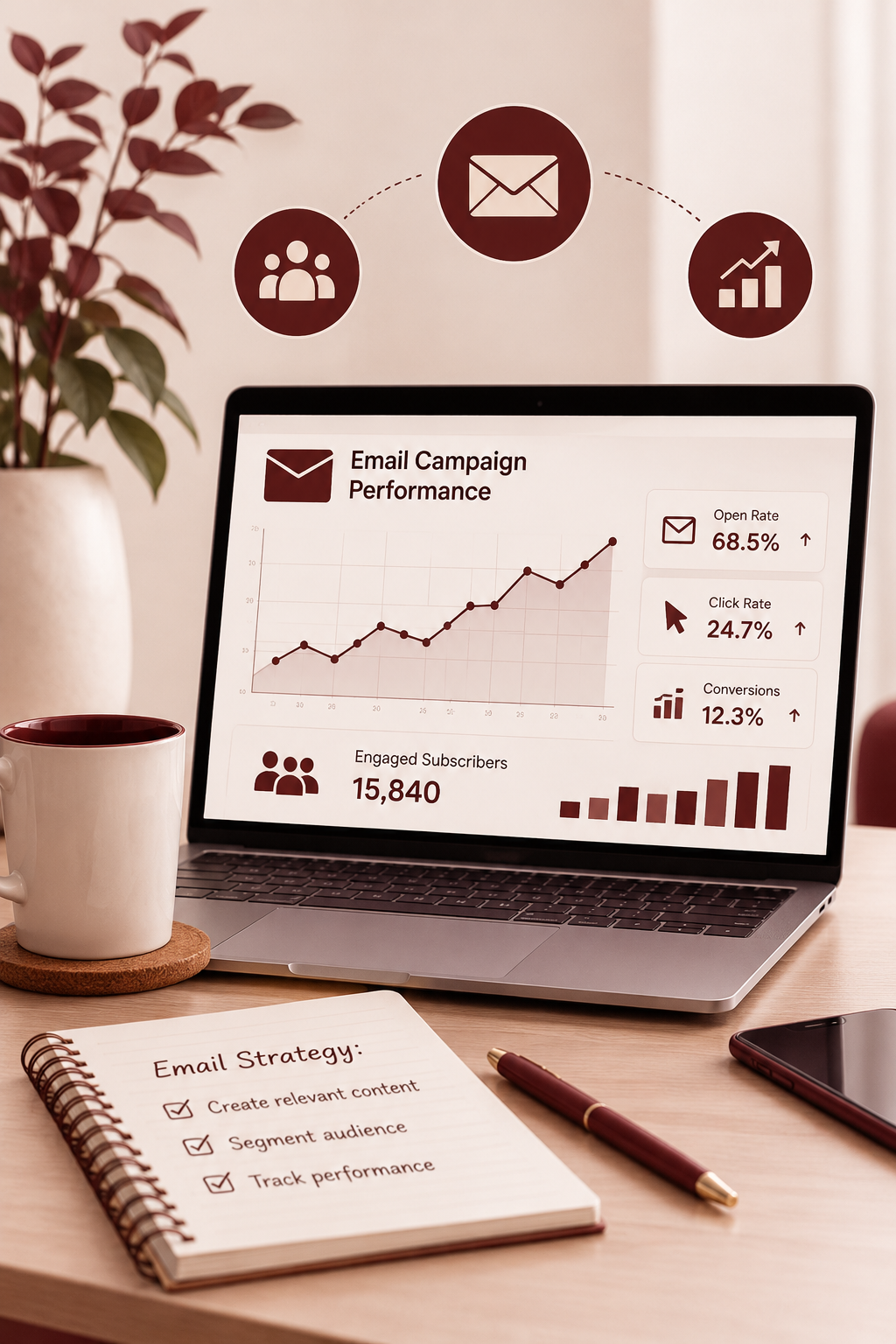
Sending an email is only one part of the process. Monitoring campaign performance helps identify what is working and where improvements are needed. Metrics such as delivery, open rates, clicks, unsubscribes, and conversions can provide useful insights for refining future campaigns.
Don't Just Reach Your Audience. Give Them a Reason to Stay Connected.
Email marketing creates an opportunity to build a relationship with your audience beyond their first interaction with your business. Instead of relying only on social media visibility or paid advertising, you can communicate directly with subscribers who have chosen to hear from you. This makes email a valuable channel for sharing information, nurturing interest, and maintaining customer relationships.
An effective strategy brings different elements together. Audience research helps shape the message, segmentation makes communication more relevant, thoughtful content encourages engagement, and automation supports timely follow-ups. Performance analysis then helps you understand how people respond and where your campaigns can improve.
The value of email marketing is not measured by the number of emails sent. It comes from the relevance of your communication and the actions it encourages. Whether your objective is to generate enquiries, promote an offer, increase repeat purchases, or build brand awareness, every campaign should contribute to a clear business goal.
Questions You May Have About Email Marketing.
1. Why should my business invest in email marketing?
Email marketing gives your business a direct way to communicate with people who have subscribed to receive updates. It can support customer engagement, promote products or services, nurture enquiries, and encourage repeat purchases.
2. Which email marketing platforms can be used?
Popular platforms include Mailchimp, Brevo, MailerLite, and Klaviyo. The right platform depends on your business requirements, audience size, budget, and the features you need, such as automation, segmentation, and campaign reporting.
3. How does the email marketing process work?
The process begins with understanding your goals and audience. It then involves planning campaigns, organising subscriber lists, creating email content, setting up and testing campaigns, and reviewing performance after sending.
4. Can email campaigns be customised for my brand?
Yes. Email campaigns can be planned around your brand identity, communication style, audience interests, and business objectives. This includes the email design, writing style, subject lines, content, and calls to action.
5. How much does email marketing cost?
The cost depends on the number of campaigns, complexity of the work, subscriber list size, automation requirements, and email platform subscription. The project scope can be discussed before deciding on the appropriate approach and pricing.
6. Can email marketing be automated?
Yes. Automated workflows can send emails when subscribers take specific actions, such as joining a mailing list, making a purchase, or submitting an enquiry. Automation helps maintain timely communication while reducing repetitive manual tasks.
7. How can I measure the success of an email campaign?
Campaign performance can be measured through delivery rates, opens, clicks, conversions, unsubscribes, and other relevant metrics. The most important measures depend on your objective. For example, a sales campaign should be evaluated beyond opens by looking at the actions and conversions it generates.
8. What do I need to get started with email marketing?
You will need a clear business objective, an understanding of your target audience, and a permission-based subscriber list. We can begin by discussing your requirements, reviewing your current communication approach, and identifying the campaigns or workflows that would be useful for your business.
Your Next Customer Connection Could Start With an Email.
A well-planned email can do more than share an update. It can answer a question, introduce an offer, bring a customer back, or start a valuable conversation. Let’s discuss how email marketing can support your business goals.